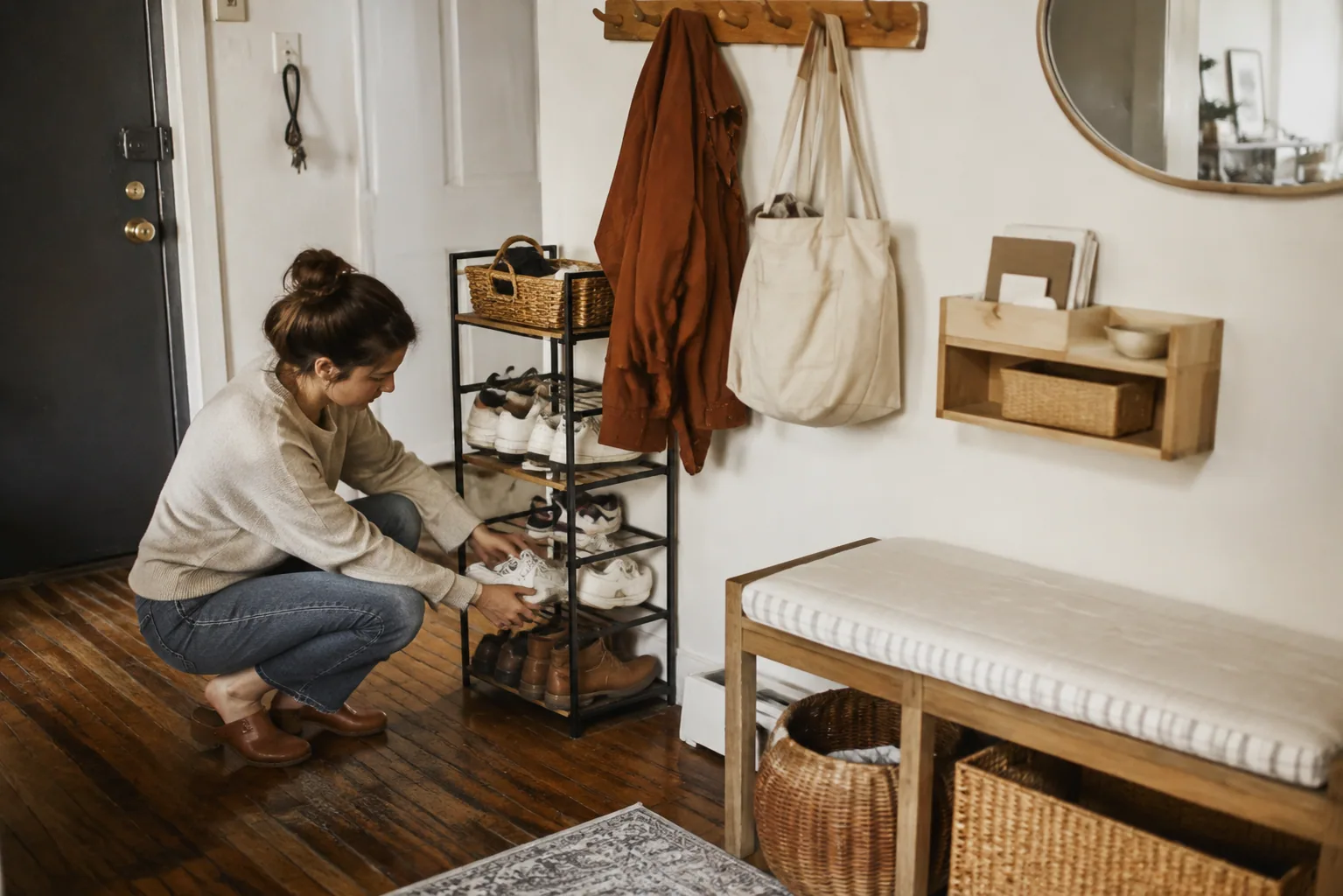
Monday begins with an empty bench; by Thursday it holds delivery boxes, two bags, stray mail, and shoes. The mess is not random—it marks the path people already take.
Entryways fail when storage is too far from the landing point or requires extra steps. Open hooks, one tray, and a realistic shoe limit often beat a complicated cabinet.
Our approach starts with the room and the routine. We compare product formats by published construction, dimensions, care needs, storage demands, and the job each one is designed to do. We do not assign numeric ratings or imply that we personally tested items we have not used.
What to prioritize before you shop
Before opening a retailer tab, look at the space in use. Measure the narrowest opening, note where hands need clearance, and picture the product at the messiest point of a normal week. These three checks prevent most “almost right” purchases:
- Observe where each item lands for one normal week.
- Give high-frequency items one-handed storage.
- Limit categories so the zone does not become whole-home overflow.
Three formats worth comparing
These are product types, not unverified promises about a specific model. Use the links to compare current dimensions, materials, care instructions, warranty terms, availability, and recent customer feedback directly with the retailer or manufacturer.
Bags, jackets, and dog leads
Wall rail with movable hooks
Why it can work: Hooks can shift as seasons and household needs change.
The tradeoff: Installation may require landlord approval.
Check current options ↗Daily pairs
Slim open shoe rack
Why it can work: Open shelves make return effortless and shoes can dry.
The tradeoff: Visible shoes need a firm quantity limit.
Check current options ↗Keys and pocket items
Shallow catchall tray
Why it can work: A defined edge keeps tiny objects from spreading.
The tradeoff: It must be emptied before it becomes a junk drawer in public.
Check current options ↗What we would skip
Skip a large closed unit if the door will block the walkway or if household members are unlikely to open it for every arrival.
Also be cautious with vague claims that are not backed by clear specifications or care guidance. A useful product should make its dimensions, materials, operating needs, and limitations easy to understand before checkout.
Make it work in daily life
Each evening, recycle obvious paper, return one stray item to its room, and keep only tomorrow’s shoes at the front.
Give the new setup a defined review point after a few weeks. If it moves the mess somewhere less visible, adds a new maintenance task, or blocks another routine, adjust placement before buying additional pieces.
Buying checklist
- Measure the space in use, including door, lid, drawer, and hand clearance.
- Read the care instructions and count the steps between dirty and ready-to-use.
- Check the return window, replacement-part availability, and warranty exclusions.
- Compare the smallest option that handles a normal week—not the largest exceptional day.
- Confirm materials and safety directions are appropriate for your household.
Frequently asked questions
What if there is no entryway?
Create a vertical zone beside the door with hooks, a tiny tray, and a washable mat. The boundary can be visual rather than architectural.
How many hooks are enough?
Plan one active hook per person plus one or two shared hooks; too many invite long-term storage.
Open or closed shoe storage?
Open storage is easier for daily use and drying. Closed storage looks calmer but needs ventilation and the habit of opening it.
Editorial note: This guide is scenario-based and uses general product-format research. Always confirm current specifications and instructions on the manufacturer or retailer page before buying.