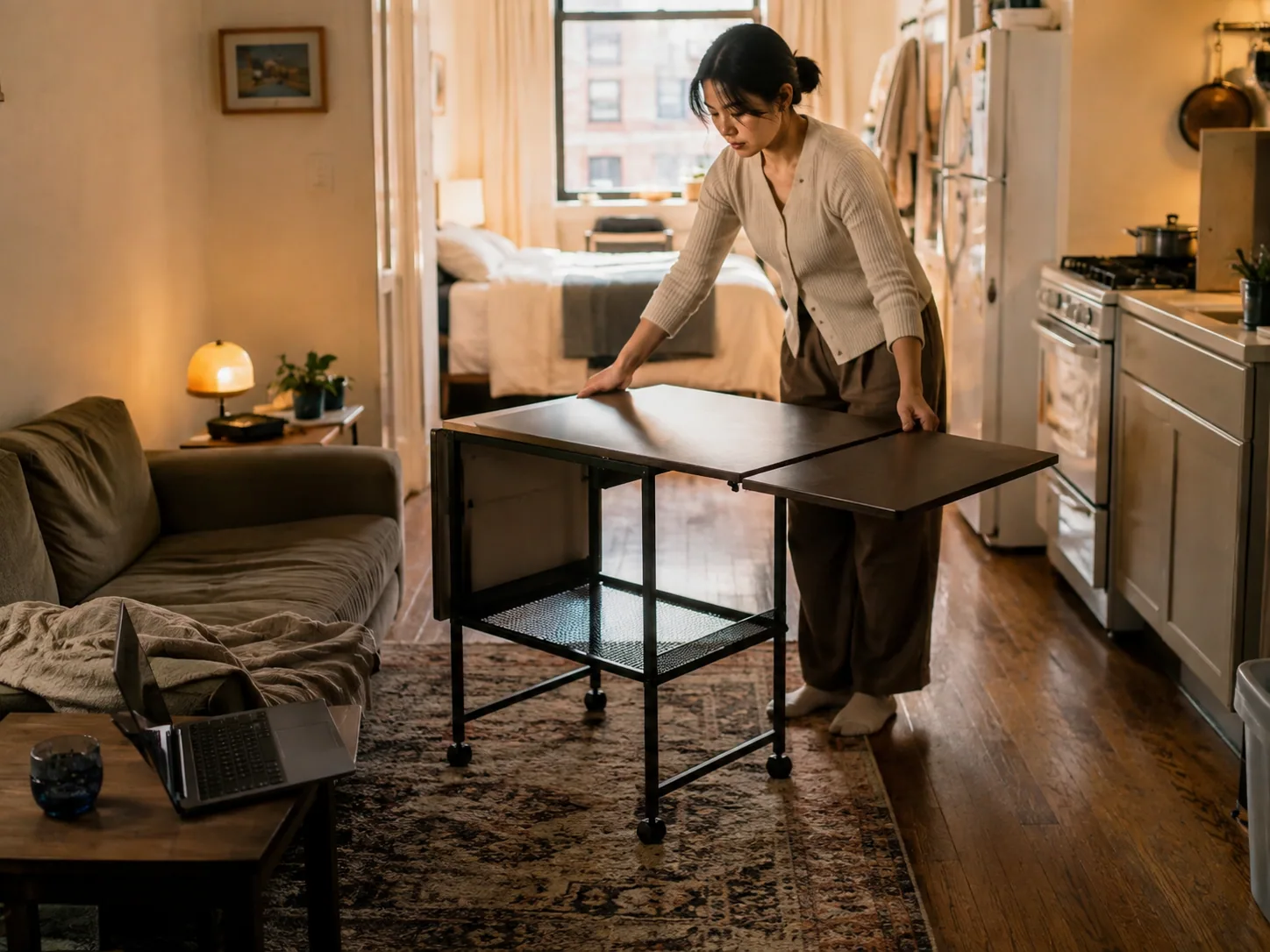
Friends arrive, but the spare chairs are wedged behind a closet shelf and feel uncomfortable before dinner is served. A useful folding chair must be easy in both states.
Shopping often focuses on appearance while ignoring carry points, hinges, folded thickness, and seated time.
Our approach starts with the room and the routine. We compare product formats by published construction, dimensions, care needs, storage demands, and the job each one is designed to do. We do not assign numeric ratings or imply that we personally tested items we have not used.
What to prioritize before you shop
Before opening a retailer tab, look at the space in use. Measure the narrowest opening, note where hands need clearance, and picture the product at the messiest point of a normal week. These three checks prevent most “almost right” purchases:
- Check seat height against the actual table.
- Measure the storage location with all chairs folded.
- Look for stable feet and protected hinge points.
Three formats worth comparing
These are product types, not unverified promises about a specific model. Use the links to compare current dimensions, materials, care instructions, warranty terms, availability, and recent customer feedback directly with the retailer or manufacturer.
Longer dinners
Padded folding chair
Why it can work: A modest cushion improves comfort without adding a separate seat pad.
The tradeoff: Upholstery adds cleaning needs and folded thickness.
Check current options ↗Warm looks and occasional use
Slatted wood folding chair
Why it can work: Wood can blend with normal dining furniture.
The tradeoff: Hard seats may need a cushion for long meals.
Check current options ↗Frequent setup and carrying
Lightweight metal-frame chair
Why it can work: A simple frame can be easy to move and wipe clean.
The tradeoff: Some models feel utilitarian and transmit floor noise.
Check current options ↗What we would skip
Skip chairs with unclear load ratings or unstable feet. Compact storage is not worth uncertain seating.
Also be cautious with vague claims that are not backed by clear specifications or care guidance. A useful product should make its dimensions, materials, operating needs, and limitations easy to understand before checkout.
Make it work in daily life
Store chairs where one person can retrieve them, add felt protectors compatible with the floor, and check hinges before gatherings.
Give the new setup a defined review point after a few weeks. If it moves the mess somewhere less visible, adds a new maintenance task, or blocks another routine, adjust placement before buying additional pieces.
Buying checklist
- Measure the space in use, including door, lid, drawer, and hand clearance.
- Read the care instructions and count the steps between dirty and ready-to-use.
- Check the return window, replacement-part availability, and warranty exclusions.
- Compare the smallest option that handles a normal week—not the largest exceptional day.
- Confirm materials and safety directions are appropriate for your household.
Frequently asked questions
What seat height fits a dining table?
Compare chair seat height with table underside clearance and allow comfortable thigh space.
Can folding chairs be everyday chairs?
Yes if they are stable, comfortable, and rated for frequent use. Many lightweight event chairs are better as occasional seating.
How can they be stored safely?
Use a stable floor slot or hardware specifically designed for the chair weight; do not stack where they can fall.
Editorial note: This guide is scenario-based and uses general product-format research. Always confirm current specifications and instructions on the manufacturer or retailer page before buying.