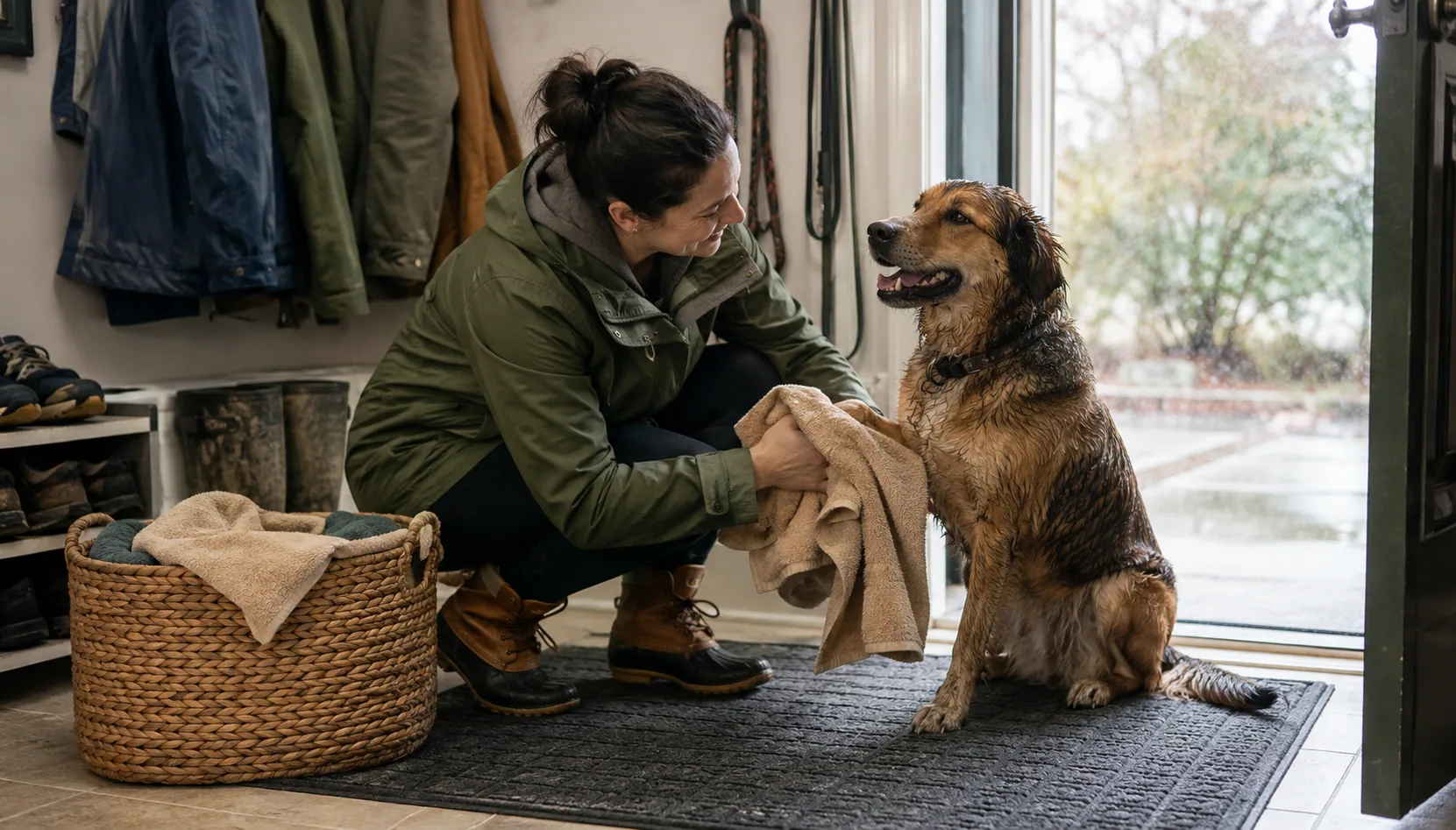
The dog comes in happy and soaked while you are still holding the lead and trying to close the door. Supplies stored in the bathroom are already too far away.
Post-walk cleanup needs one-handed access, washable materials, and a mat large enough for the dog to stand on before shaking.
Our approach starts with the room and the routine. We compare product formats by published construction, dimensions, care needs, storage demands, and the job each one is designed to do. We do not assign numeric ratings or imply that we personally tested items we have not used.
What to prioritize before you shop
Before opening a retailer tab, look at the space in use. Measure the narrowest opening, note where hands need clearance, and picture the product at the messiest point of a normal week. These three checks prevent most “almost right” purchases:
- Place supplies on the inside-door path.
- Choose machine-washable or easy-rinse textiles.
- Keep hooks and containers above pet reach where appropriate.
Three formats worth comparing
These are product types, not unverified promises about a specific model. Use the links to compare current dimensions, materials, care instructions, warranty terms, availability, and recent customer feedback directly with the retailer or manufacturer.
Containing wet paws
Absorbent washable entry mat
Why it can work: A defined landing zone protects nearby floors and buys time.
The tradeoff: Thick mats take longer to wash and dry.
Check current options ↗Clean and used dog towels
Handled towel basket
Why it can work: A portable basket keeps several towels ready.
The tradeoff: Damp towels should not remain piled inside.
Check current options ↗Leads, bags, and treats
Wall lead hook with shelf
Why it can work: A compact station supports the whole departure-and-return routine.
The tradeoff: Treat storage must be secure and installation appropriate.
Check current options ↗What we would skip
Skip mats that slide on your flooring or have care requirements that do not match frequent washing. Test grip while the surface is dry and damp.
Also be cautious with vague claims that are not backed by clear specifications or care guidance. A useful product should make its dimensions, materials, operating needs, and limitations easy to understand before checkout.
Make it work in daily life
Ask the dog to pause on the mat, wipe one paw at a time, hang the towel open to dry, then sweep the area once the grit has dried.
Give the new setup a defined review point after a few weeks. If it moves the mess somewhere less visible, adds a new maintenance task, or blocks another routine, adjust placement before buying additional pieces.
Buying checklist
- Measure the space in use, including door, lid, drawer, and hand clearance.
- Read the care instructions and count the steps between dirty and ready-to-use.
- Check the return window, replacement-part availability, and warranty exclusions.
- Compare the smallest option that handles a normal week—not the largest exceptional day.
- Confirm materials and safety directions are appropriate for your household.
Frequently asked questions
How large should the mat be?
Large enough for the dog to stand and turn with all paws on the surface, while leaving the door safe to operate.
Can microfiber towels be used on pets?
Many pet towels use microfiber, but choose a product intended for the purpose and keep it clean and fully dry.
What about paw-cleaning cups?
They can help some dogs, but introduce slowly, use gentle handling, and follow product directions.
Editorial note: This guide is scenario-based and uses general product-format research. Always confirm current specifications and instructions on the manufacturer or retailer page before buying.