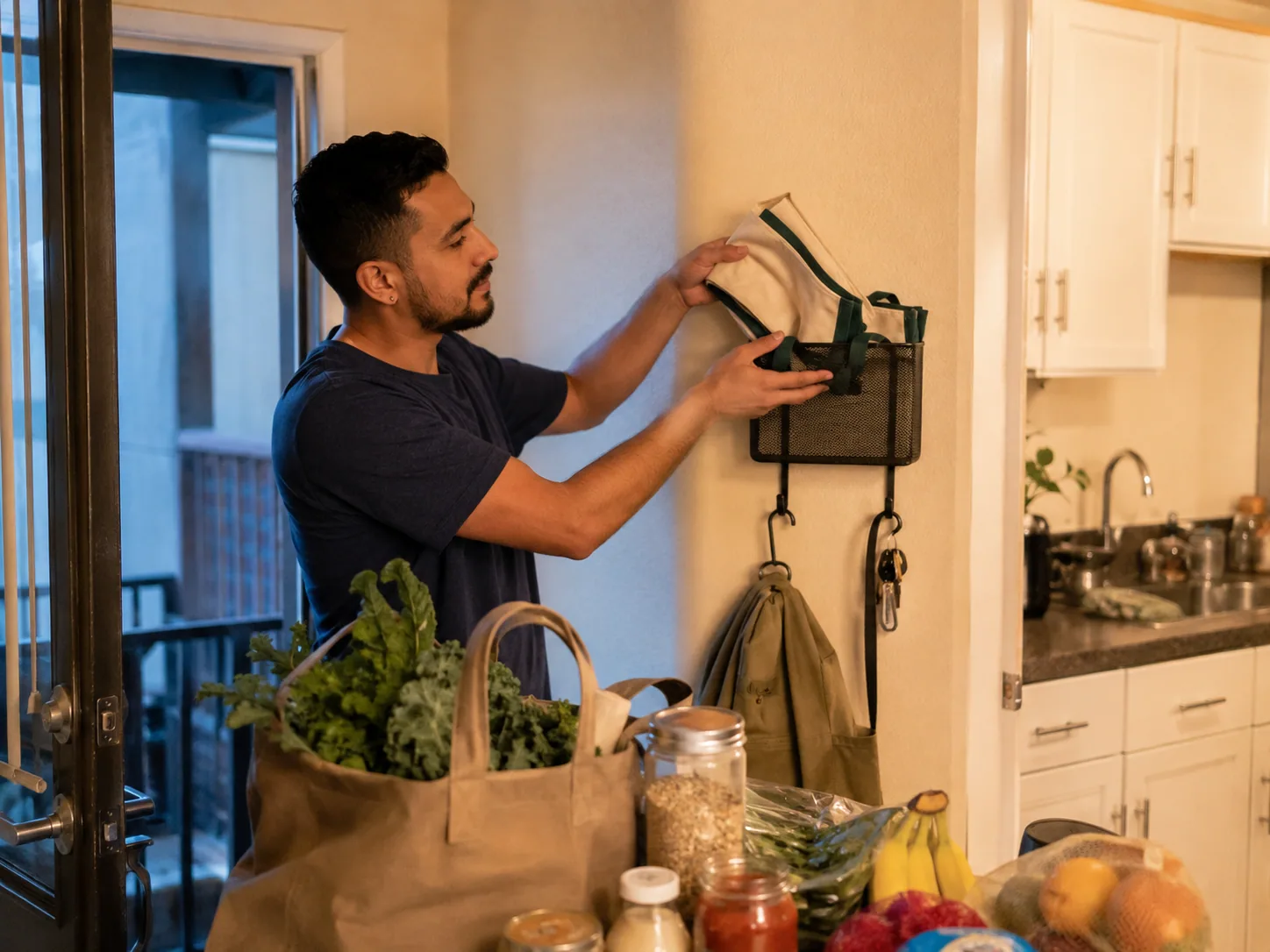
Reusable bags exist in three closets but none are in the car or by the door when groceries happen. The issue is location and quantity, not another tote.
Bag collections grow because freebies and specialty shapes arrive faster than they leave. A compact kit should support the normal store, produce, and heavy-item trip.
Our approach starts with the room and the routine. We compare product formats by published construction, dimensions, care needs, storage demands, and the job each one is designed to do. We do not assign numeric ratings or imply that we personally tested items we have not used.
What to prioritize before you shop
Before opening a retailer tab, look at the space in use. Measure the narrowest opening, note where hands need clearance, and picture the product at the messiest point of a normal week. These three checks prevent most “almost right” purchases:
- Keep the kit at the departure point.
- Choose washable construction and reinforced handles.
- Limit shapes to trips that occur regularly.
Three formats worth comparing
These are product types, not unverified promises about a specific model. Use the links to compare current dimensions, materials, care instructions, warranty terms, availability, and recent customer feedback directly with the retailer or manufacturer.
Boxy pantry goods
Two structured grocery totes
Why it can work: A flat base keeps jars and cartons upright.
The tradeoff: Structured bags fold less compactly.
Check current options ↗Unplanned small shops
Compact fold-up bag pair
Why it can work: They live in a daily bag without much bulk.
The tradeoff: Thin fabric is less comfortable with heavy loads.
Check current options ↗Loose fruit and vegetables
Washable produce bag set
Why it can work: A few light bags reduce disposable produce bags.
The tradeoff: They need washing and can be forgotten in the main tote.
Check current options ↗What we would skip
Skip large sets before learning which handles, sizes, and closures you prefer. Ten awkward bags are not a better system than three useful ones.
Also be cautious with vague claims that are not backed by clear specifications or care guidance. A useful product should make its dimensions, materials, operating needs, and limitations easy to understand before checkout.
Make it work in daily life
After unloading, place used bags by the laundry if needed, fold clean bags into the main tote, and return the full kit to the door or vehicle.
Give the new setup a defined review point after a few weeks. If it moves the mess somewhere less visible, adds a new maintenance task, or blocks another routine, adjust placement before buying additional pieces.
Buying checklist
- Measure the space in use, including door, lid, drawer, and hand clearance.
- Read the care instructions and count the steps between dirty and ready-to-use.
- Check the return window, replacement-part availability, and warranty exclusions.
- Compare the smallest option that handles a normal week—not the largest exceptional day.
- Confirm materials and safety directions are appropriate for your household.
Frequently asked questions
How many reusable bags are enough?
Use the largest normal grocery trip as the upper limit, then add one compact emergency bag.
How often should they be washed?
Wash after leaks, raw-food contact, or visible soil and follow each bag’s care label.
Where should they be stored?
At the point where you choose shoes, keys, or transport—where the reminder naturally happens.
Editorial note: This guide is scenario-based and uses general product-format research. Always confirm current specifications and instructions on the manufacturer or retailer page before buying.