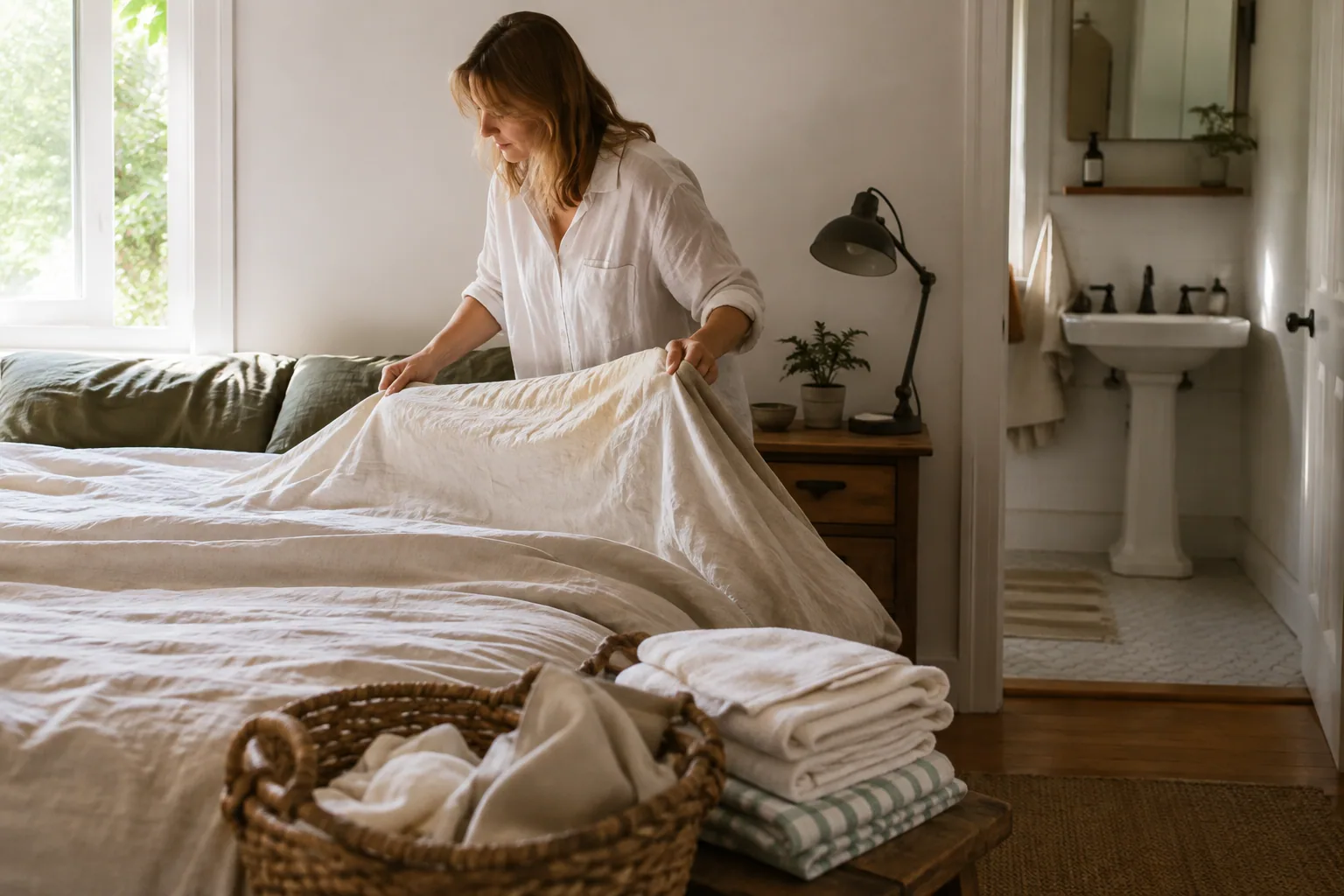
The hamper fits beautifully in the bedroom, but it is too wide for the basement stairs and has no comfortable handles. Every load becomes an awkward carry.
Hamper capacity is only useful when a full load can be lifted, carried, emptied, and returned without scraping walls or losing socks.
Our approach starts with the room and the routine. We compare product formats by published construction, dimensions, care needs, storage demands, and the job each one is designed to do. We do not assign numeric ratings or imply that we personally tested items we have not used.
What to prioritize before you shop
Before opening a retailer tab, look at the space in use. Measure the narrowest opening, note where hands need clearance, and picture the product at the messiest point of a normal week. These three checks prevent most “almost right” purchases:
- Measure the narrowest doorway and route to the washer.
- Choose handles that stay accessible when full.
- Use breathable construction for damp items.
Three formats worth comparing
These are product types, not unverified promises about a specific model. Use the links to compare current dimensions, materials, care instructions, warranty terms, availability, and recent customer feedback directly with the retailer or manufacturer.
Narrow floors and tight turns
Tall flexible hamper
Why it can work: A flexible body squeezes through doorways and is easy to tip.
The tradeoff: It can sag when overloaded.
Check current options ↗Households that pre-sort
Two-section sorter
Why it can work: Divided loads reduce floor piles on wash day.
The tradeoff: Large frames are harder to carry to shared laundry rooms.
Check current options ↗Stairs and laundromats
Backpack laundry bag
Why it can work: Shoulder straps free hands for doors and detergent.
The tradeoff: Soft bags do not stand neatly when empty.
Check current options ↗What we would skip
Skip fixed sorters if you still need to transfer clothes into another basket. One container that completes the route is usually simpler.
Also be cautious with vague claims that are not backed by clear specifications or care guidance. A useful product should make its dimensions, materials, operating needs, and limitations easy to understand before checkout.
Make it work in daily life
Air damp towels before adding them, stop filling at a comfortable carry weight, and keep stain supplies near the place clothes are removed.
Give the new setup a defined review point after a few weeks. If it moves the mess somewhere less visible, adds a new maintenance task, or blocks another routine, adjust placement before buying additional pieces.
Buying checklist
- Measure the space in use, including door, lid, drawer, and hand clearance.
- Read the care instructions and count the steps between dirty and ready-to-use.
- Check the return window, replacement-part availability, and warranty exclusions.
- Compare the smallest option that handles a normal week—not the largest exceptional day.
- Confirm materials and safety directions are appropriate for your household.
Frequently asked questions
Should hampers have lids?
Lids hide contents but can trap moisture. They work best for dry laundry in ventilated spaces.
Is a sorter worth the floor space?
Yes when sorting is a genuine household habit and bags remove individually; otherwise one portable hamper is more flexible.
What capacity should I buy?
Match it to one comfortable machine load and the amount you can safely carry, not the longest possible gap between washes.
Editorial note: This guide is scenario-based and uses general product-format research. Always confirm current specifications and instructions on the manufacturer or retailer page before buying.