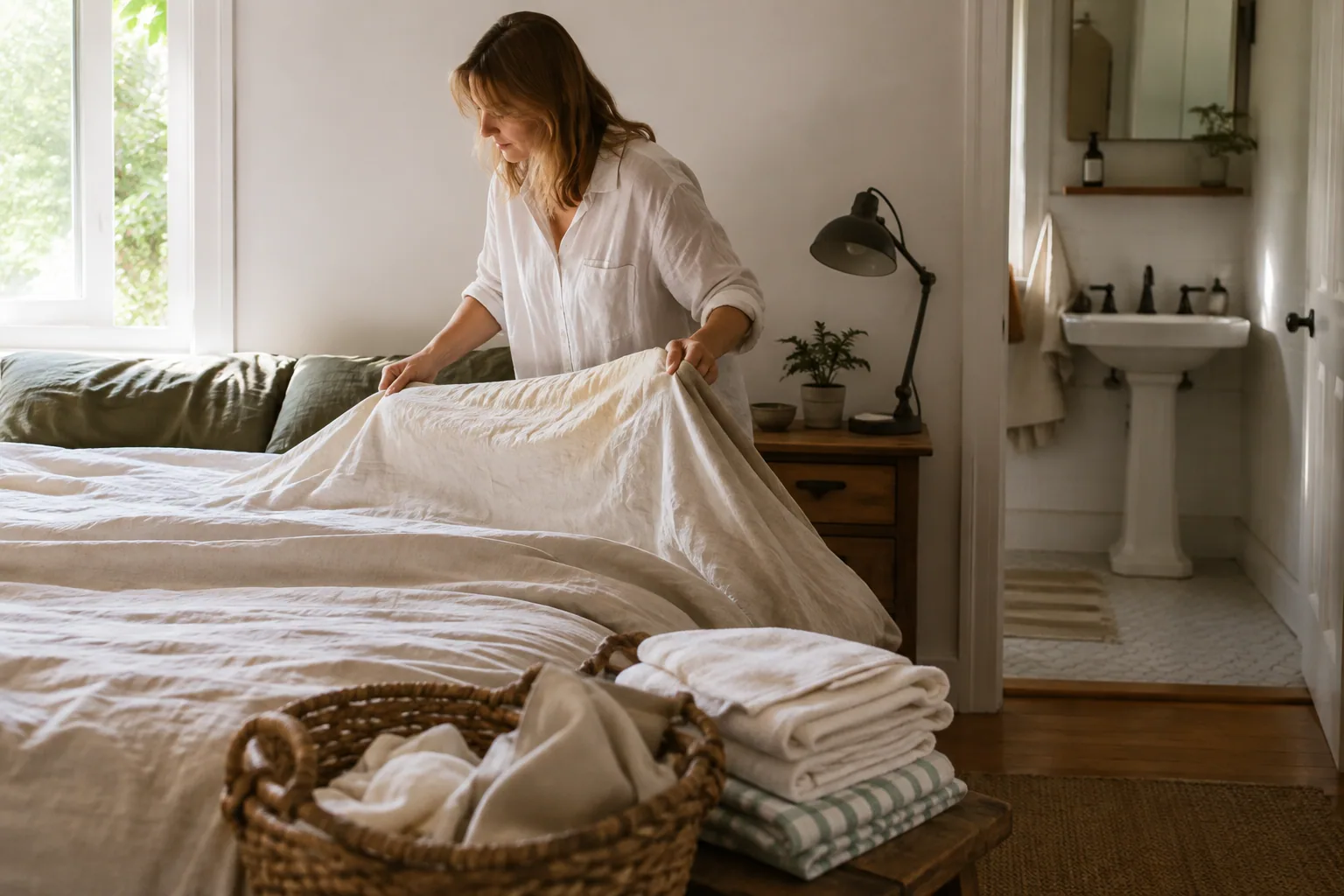
The room feels comfortable at bedtime, but you wake warm and push the bedding aside. Breathability is a system that includes the mattress protector, duvet, sleepwear, and sheets.
Words like “cooling” are used loosely. Published fiber and weave details, return policies, and care instructions are more useful than unsupported temperature promises.
Our approach starts with the room and the routine. We compare product formats by published construction, dimensions, care needs, storage demands, and the job each one is designed to do. We do not assign numeric ratings or imply that we personally tested items we have not used.
What to prioritize before you shop
Before opening a retailer tab, look at the space in use. Measure the narrowest opening, note where hands need clearance, and picture the product at the messiest point of a normal week. These three checks prevent most “almost right” purchases:
- Compare weave and fabric weight, not just thread count.
- Check whether the fitted depth matches your mattress and protector.
- Choose care instructions you can follow every week.
Three formats worth comparing
These are product types, not unverified promises about a specific model. Use the links to compare current dimensions, materials, care instructions, warranty terms, availability, and recent customer feedback directly with the retailer or manufacturer.
Crisp, airy sleepers
Cotton percale sheet set
Why it can work: The plain weave typically feels light and structured.
The tradeoff: Percale wrinkles and can feel less silky.
Check current options ↗Textured, relaxed bedding
Linen sheet set
Why it can work: Linen is valued for airflow and a casual drape.
The tradeoff: It can feel rough initially and often costs more.
Check current options ↗Layering without a heavy duvet
Lightweight cotton blanket
Why it can work: A breathable layer can be adjusted through the night.
The tradeoff: Open weaves may snag on pets or jewelry.
Check current options ↗What we would skip
Do not chase a high thread-count number as a universal quality score. Construction, yarn, finishing, and personal texture preference all affect the result.
Also be cautious with vague claims that are not backed by clear specifications or care guidance. A useful product should make its dimensions, materials, operating needs, and limitations easy to understand before checkout.
Make it work in daily life
Wash new bedding before use according to its label, keep the warmest layer easy to remove, and evaluate the whole sleep stack rather than one sheet in isolation.
Give the new setup a defined review point after a few weeks. If it moves the mess somewhere less visible, adds a new maintenance task, or blocks another routine, adjust placement before buying additional pieces.
Buying checklist
- Measure the space in use, including door, lid, drawer, and hand clearance.
- Read the care instructions and count the steps between dirty and ready-to-use.
- Check the return window, replacement-part availability, and warranty exclusions.
- Compare the smallest option that handles a normal week—not the largest exceptional day.
- Confirm materials and safety directions are appropriate for your household.
Frequently asked questions
Is linen always cooler than cotton?
Not for everyone. Fabric weight, weave, humidity, and feel matter; compare published construction and return terms.
Does thread count predict softness?
It is one imperfect input. Fiber quality, weave, and finishing can matter more than a large number.
How deep should fitted sheets be?
Measure the mattress plus any topper or pad, then choose a pocket depth with enough—but not excessive—room.
Editorial note: This guide is scenario-based and uses general product-format research. Always confirm current specifications and instructions on the manufacturer or retailer page before buying.