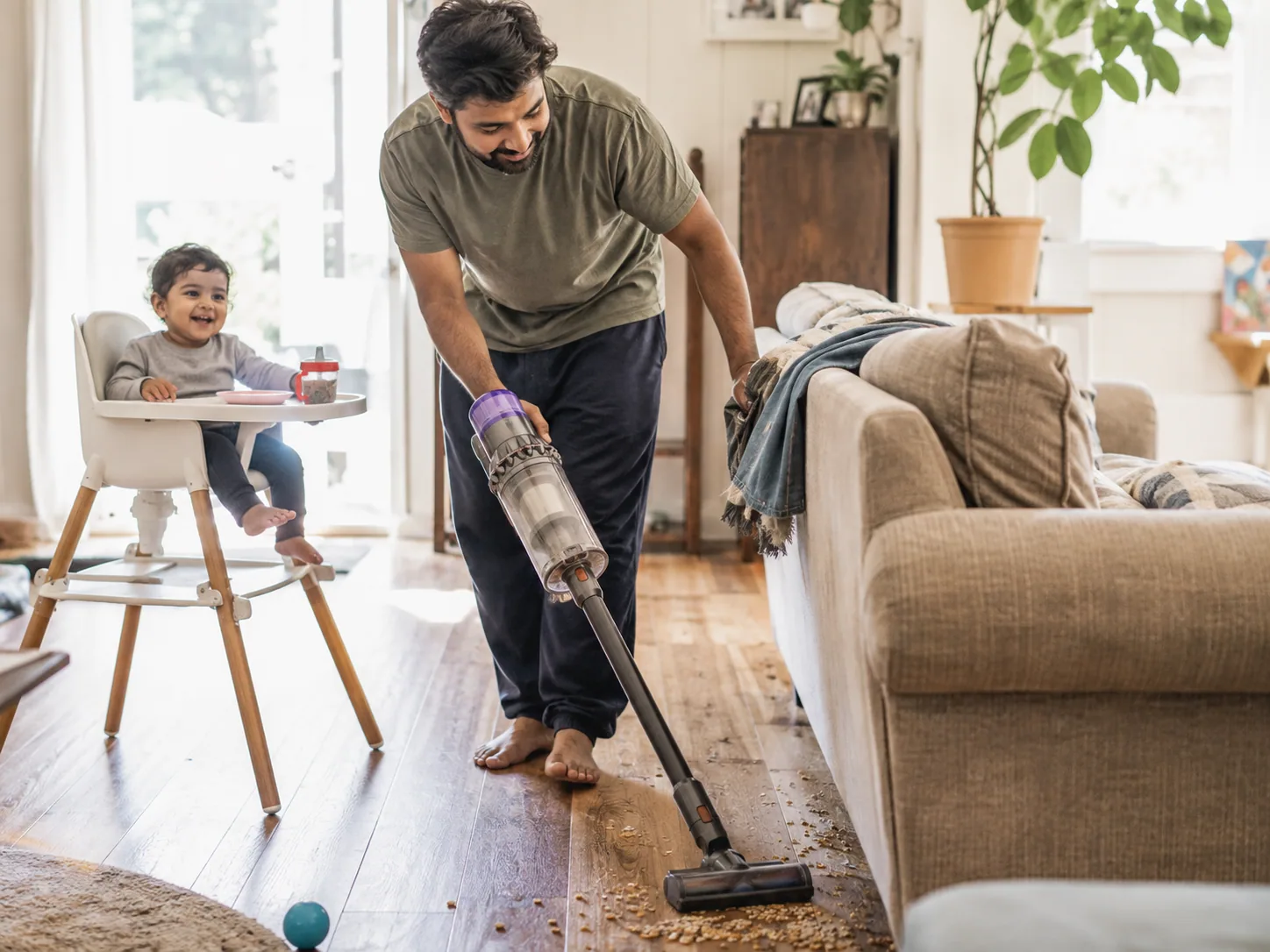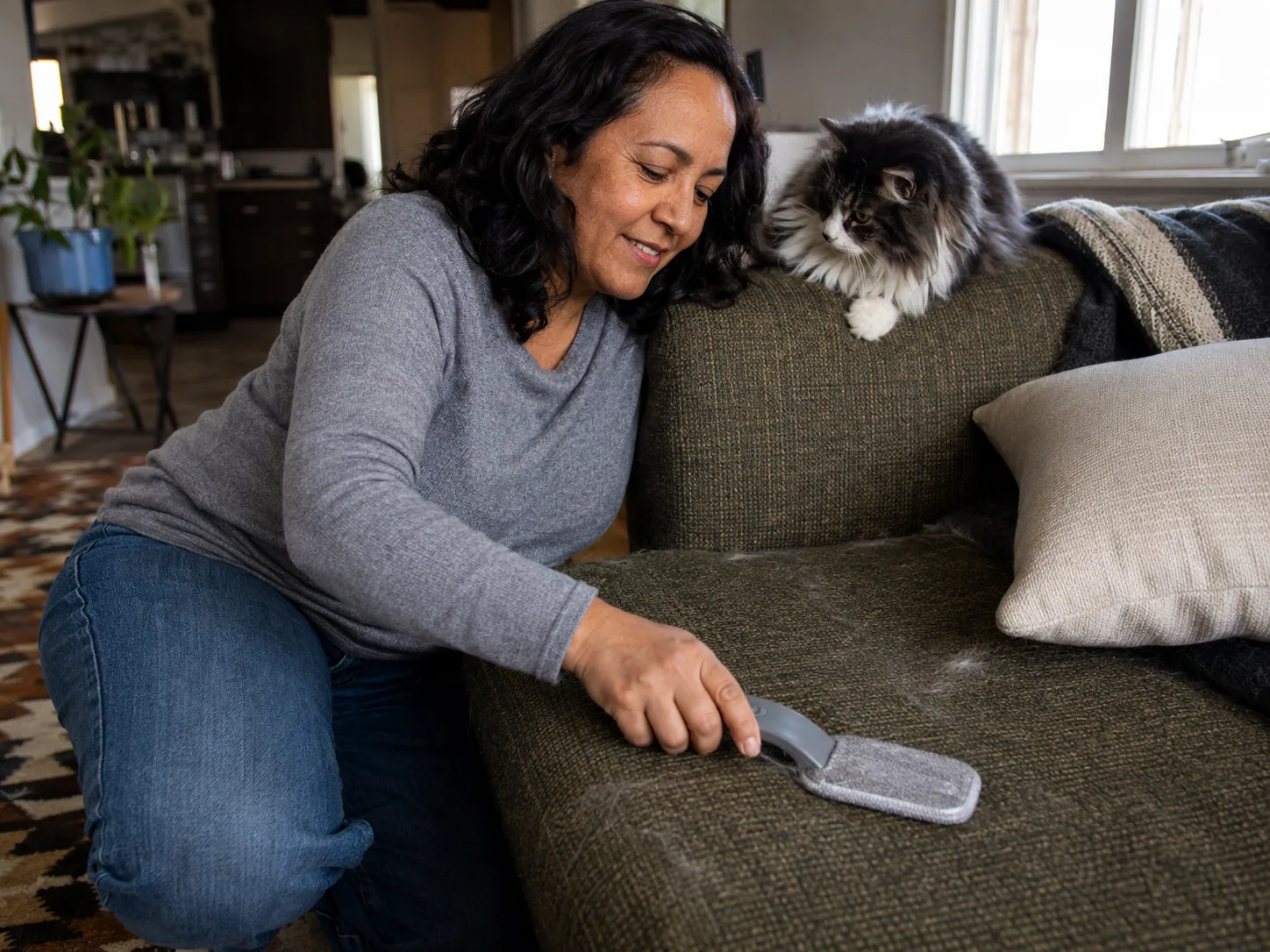
The sofa looks fine until afternoon light reveals a layer of fur, and guests are arriving in twenty minutes. A small, reusable tool can handle the visible zones without a whole-house vacuum.
Hair behaves differently on woven upholstery, smooth fabric, carpet, and clothing. One miracle tool is unlikely; a compact two-tool system usually works better.
Our approach starts with the room and the routine. We compare product formats by published construction, dimensions, care needs, storage demands, and the job each one is designed to do. We do not assign numeric ratings or imply that we personally tested items we have not used.
What to prioritize before you shop
Before opening a retailer tab, look at the space in use. Measure the narrowest opening, note where hands need clearance, and picture the product at the messiest point of a normal week. These three checks prevent most “almost right” purchases:
- Match the edge or surface to the fabric manufacturer’s guidance.
- Choose a debris chamber that empties cleanly.
- Keep one tool where the hair is noticed, not hidden with deep-clean supplies.
Three formats worth comparing
These are product types, not unverified promises about a specific model. Use the links to compare current dimensions, materials, care instructions, warranty terms, availability, and recent customer feedback directly with the retailer or manufacturer.
Sofas and flat fabric
Reusable upholstery roller
Why it can work: Back-and-forth motion gathers hair without disposable sheets.
The tradeoff: It can be awkward on curved cushions.
Check current options ↗Car seats and rug edges
Soft rubber detail brush
Why it can work: Flexible teeth lift hair from textured surfaces.
The tradeoff: Aggressive pressure may fuzz delicate fabric.
Check current options ↗Clothes and small touchups
Washable lint brush
Why it can work: It stores by the door and creates little waste.
The tradeoff: Directional fabric requires the correct stroke.
Check current options ↗What we would skip
Avoid hard scraping tools on delicate upholstery. Always test the least aggressive option in a hidden area and stop if fibers lift.
Also be cautious with vague claims that are not backed by clear specifications or care guidance. A useful product should make its dimensions, materials, operating needs, and limitations easy to understand before checkout.
Make it work in daily life
Brush the pet’s favorite seat twice a week, vacuum gathered piles, and wash removable covers according to their care labels.
Give the new setup a defined review point after a few weeks. If it moves the mess somewhere less visible, adds a new maintenance task, or blocks another routine, adjust placement before buying additional pieces.
Buying checklist
- Measure the space in use, including door, lid, drawer, and hand clearance.
- Read the care instructions and count the steps between dirty and ready-to-use.
- Check the return window, replacement-part availability, and warranty exclusions.
- Compare the smallest option that handles a normal week—not the largest exceptional day.
- Confirm materials and safety directions are appropriate for your household.
Frequently asked questions
Do dryer sheets remove pet hair?
They may change static but can leave residue and create waste. A reusable brush or damp rubber glove is a simpler first try.
What helps hair release in laundry?
Shake items before washing, avoid overloading the machine, and clean the lint filter. Follow appliance and fabric instructions.
Can a tool damage a sofa?
Yes. Test on a hidden patch and avoid blades or rough edges on loosely woven or delicate fabric.
Editorial note: This guide is scenario-based and uses general product-format research. Always confirm current specifications and instructions on the manufacturer or retailer page before buying.